
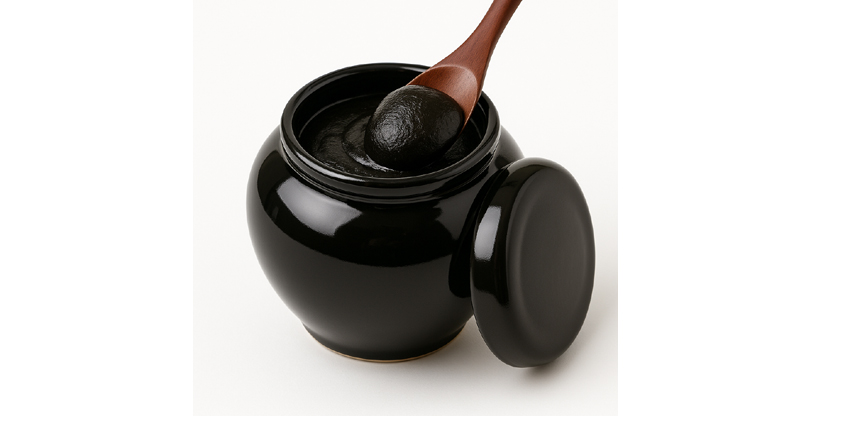
Kyungok-go: A Traditional Herbal Tonic
Kyungok-go was first created by Chinese physician Shin Cheol-ong, who discovered its effectiveness for treating dry cough using four key ingredients: Korean ginseng, di huang (rehmannia root), fu ling (poria), and honey. His findings were recorded by Hong Joon of the Song Dynasty in Hong-ssi-jip-heom-bang, the earliest known text mentioning Kyungok-go.
Its remarkable effects led to frequent appearances in medical texts. It was introduced in Gu-seon Hwal-in-sim-beop by Joo Gwon (Ming Dynasty), Jang-ssi-eui-tong by Jang Ro (Qing Dynasty), and detailed in Korea’s Dongui Bogam, compiled by Heo Joon during the Joseon Dynasty.
Symbolism and Efficacy in Korean Medicine
In the Dongui Bogam, Kyungok-go is the first prescription in the section on health and longevity, highlighting its symbolic importance. While its position doesn’t mean it’s the best, it reflects its strong representation of Korean herbal principles.
The tonic combines di huang (mind), fu ling (soul), and ginseng (spirit)—each with a different natural movement—balanced by honey (blood). These ingredients must be locally sourced, as only then do they fully harmonize and become effective. True Kyungok-go must be customized for each patient’s condition, not used as a one-size-fits-all remedy.
Why Only Local Ingredients Matter
Korea’s harsh climate and poor soil are not ideal for crops, but perfect for medicinal herbs. Plants and animals growing in such conditions develop resilience, which becomes medicinal. Just as apples grow sweeter with large temperature swings, change itself creates medicine.
In short, Kyungok-go is a symbolic and practical essence of Korean traditional medicine—effective, harmonized, and deeply rooted in the land.
